

; ?>/theme/images/logo.svg)
Introduction
Artificial Intelligence (AI) is no longer a futuristic concept—it is a powerful technology shaping the way modern businesses operate and grow. From automating processes to delivering smarter customer experiences, AI has become a key driver of digital transformation. In this article, we explore what artificial intelligence is, how it evolved, and how it impacts our daily lives and business environments.

What Is Artificial Intelligence?
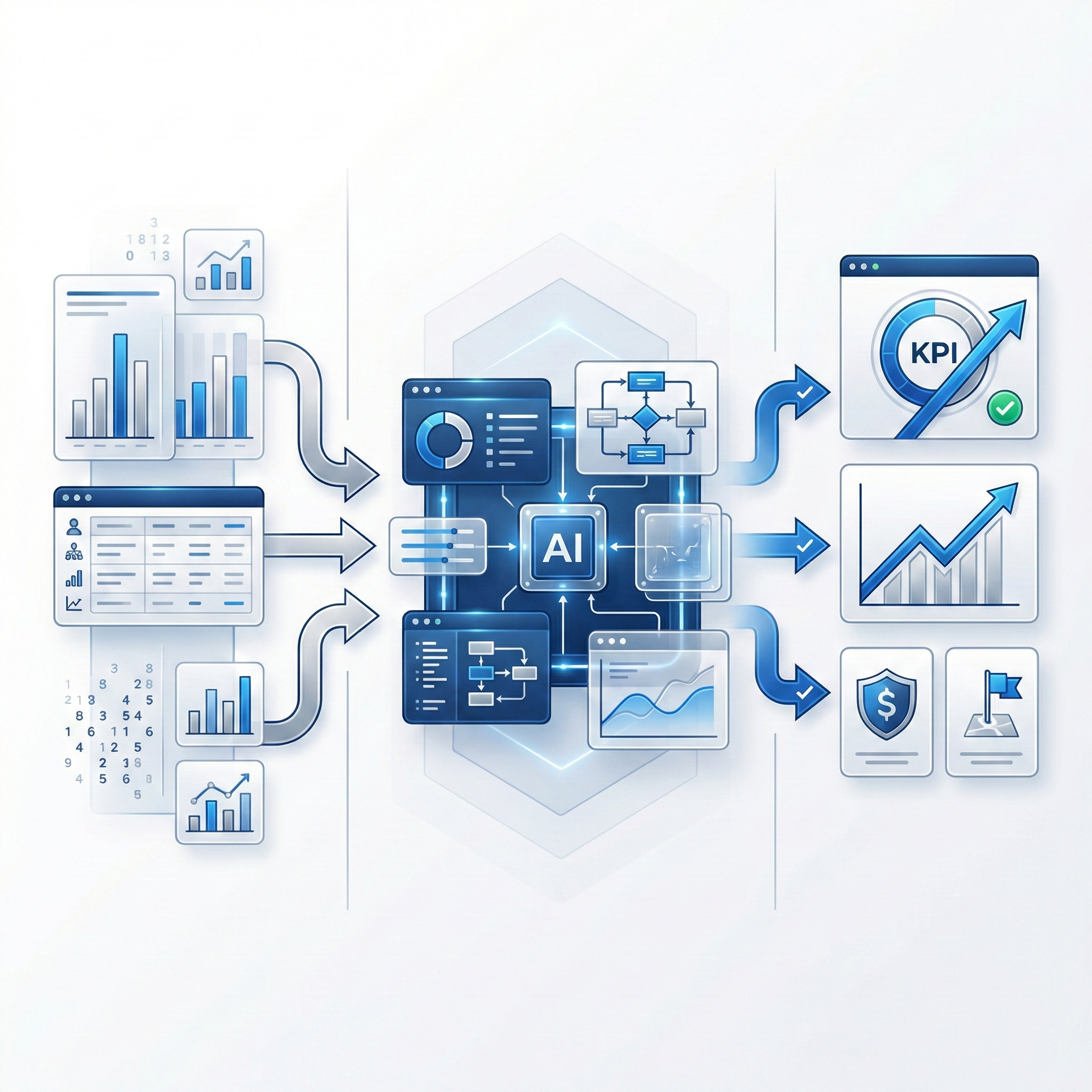
Artificial Intelligence refers to the ability of machines and software systems to simulate human intelligence. These systems are designed to learn from data, recognize patterns, analyze information, and make decisions with minimal human intervention.
AI-powered solutions can perform tasks such as problem-solving, language understanding, image recognition, and predictive analysis—often faster and more accurately than traditional systems. This makes AI an essential tool for companies seeking efficiency, innovation, and competitive advantage.
A Brief History of Artificial Intelligence
The concept of artificial intelligence dates back to the 1950s, when scientists began exploring whether machines could think like humans. The term Artificial Intelligence was officially introduced in 1956 during a scientific conference in the United States.
Early Development
Initial AI research focused on rule-based systems and theoretical models, but progress was limited by computing power and data availability.
Modern AI Revolution
In recent decades, advances in computing, cloud technology, big data, and machine learning have fueled rapid AI development. Today, AI systems are capable of self-learning, adapting, and continuously improving—making them practical and scalable for real-world applications.
Artificial Intelligence in Everyday Life
AI is deeply integrated into our daily routines and business interactions. Common examples include:
Smart Devices and Mobile Applications
- Voice assistants and smart search
- Facial recognition and biometric security
- Predictive text and personalization
Digital Marketing and E-commerce
- Personalized product recommendations
- Targeted advertising and customer insights
- Demand forecasting and behavior analysis
Navigation and Transportation
- Real-time traffic prediction
- Route optimization
- Smart logistics management
Healthcare and Customer Support
- Medical image analysis and diagnostics
- AI-powered chatbots for 24/7 customer service
- Automated data processing and reporting
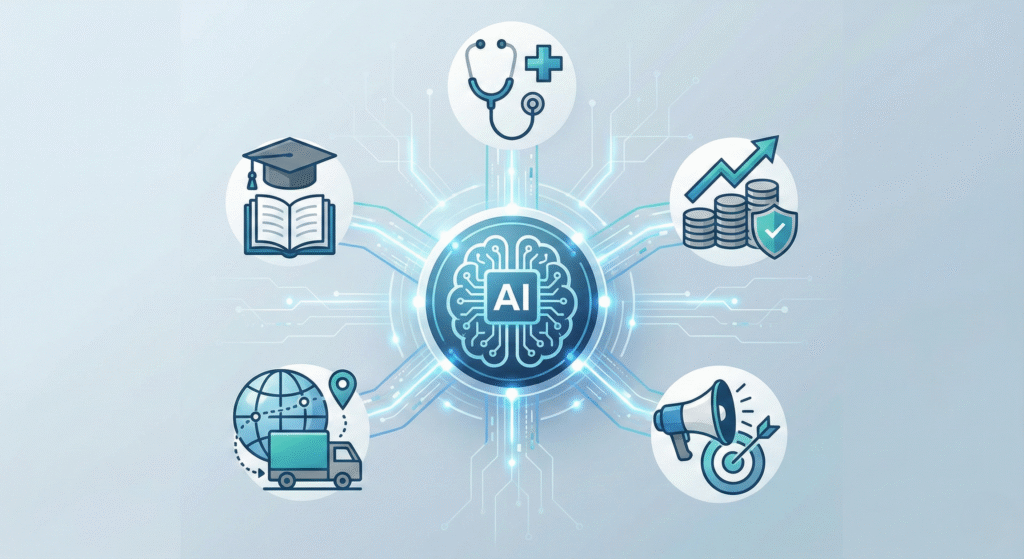
These applications demonstrate how AI enhances efficiency, accuracy, and user experience across industries.
Why Artificial Intelligence Matters for Businesses
AI enables organizations to:
- Improve operational efficiency
- Make data-driven decisions
- Enhance customer engagement
- Reduce costs and human error
- Scale services intelligently
Companies that adopt AI technologies position themselves at the forefront of innovation and long-term growth.
Conclusion
Artificial Intelligence is transforming how businesses and individuals interact with technology. As AI continues to evolve, it offers unprecedented opportunities for innovation, automation, and smarter decision-making. Embracing AI today means building a more efficient, intelligent, and future-ready organization.