



; ?>/theme/images/logo.svg)
Introduction
In 2025, Artificial Intelligence (AI) has evolved from a promising technology into a strategic business cornerstone. Across industries, organizations are leveraging AI to automate workflows, improve customer experiences, and enable smarter decision-making.
From retail and healthcare to logistics and enterprise software, AI adoption has moved beyond experimentation. Recent surveys indicate that most companies now use AI in at least one business function, with many scaling its implementation across operations.
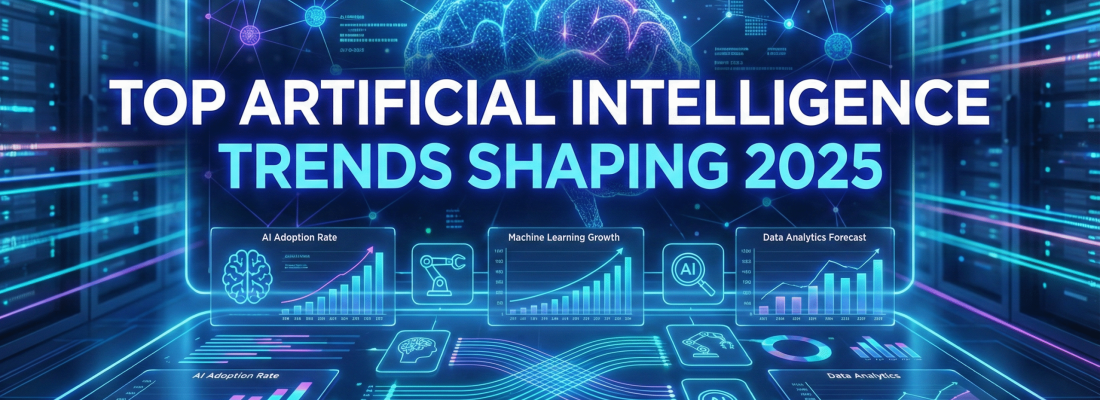
In this article, we explore the most influential artificial intelligence trends shaping 2025, their real-world applications, and how they are transforming the way businesses operate and innovate.
1. Autonomous & Agentic AI — The Next Evolution in Automation
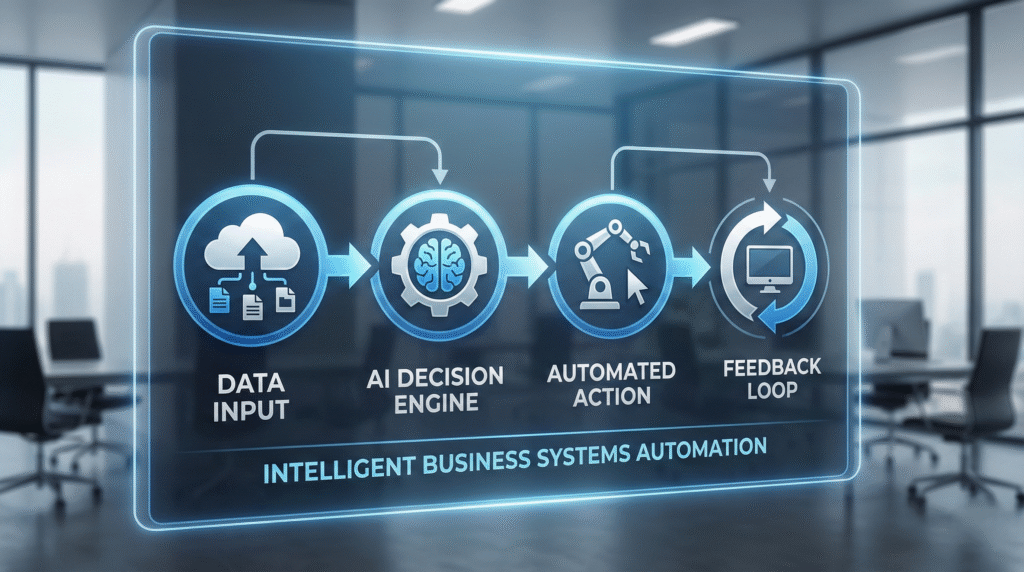
One of the most transformative AI trends in 2025 is the rise of autonomous and agentic AI systems. These intelligent agents go beyond traditional AI assistants by independently planning, reasoning, and executing multi-step tasks.
Enterprise Context
In areas such as customer service, finance, and operations, AI agents can now manage workflows autonomously. Common use cases include processing insurance claims, handling support tickets, and coordinating internal tasks with minimal human intervention.
Organizations that integrate advanced AI agents into enterprise systems report significant improvements in operational efficiency and a reduction in human workload for repetitive tasks.
Impact
Reduces time spent on manual and routine work
Frees human teams to focus on strategic initiatives
Accelerates business processes through autonomous execution
2. AI Adoption Across Industries — Real Use Cases in 2025
AI is now deeply embedded across major industries, delivering measurable business value and competitive advantage.
Retail & E-Commerce
AI-powered recommendation engines personalize product suggestions and optimize pricing strategies, leading to higher conversion rates and improved customer retention.
Media & Streaming Platforms
Streaming services rely on AI to analyze user behavior and personalize content recommendations, increasing engagement and time spent on platforms.
Healthcare
Healthcare providers apply AI for diagnostics, early disease detection, and predictive analytics, improving both patient outcomes and operational efficiency.
Manufacturing & Predictive Maintenance
AI systems monitor equipment performance and predict failures before they occur, reducing downtime and lowering maintenance costs.
Cloud Infrastructure Optimization
AI-driven platforms optimize cloud resource usage and manage large-scale infrastructure more efficiently, helping organizations reduce costs.
These examples demonstrate that AI is no longer experimental—it now directly impacts profitability and long-term competitiveness.

3. Multimodal AI — Contextual Understanding Across Inputs
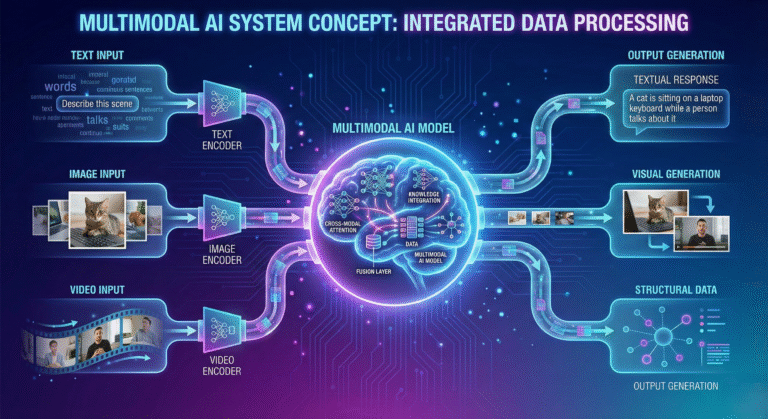
In 2025, multimodal AI systems capable of understanding text, images, audio, and video simultaneously have become increasingly common. This capability enables richer insights and more advanced interactions.
Use Case
Government agencies and enterprises use multimodal AI for automated document and media processing. Examples include analyzing public records, interpreting satellite imagery, and screening compliance documents at the same time.
Impact
Improved data synthesis across multiple formats
Enhanced decision-making and insights
New and more intuitive human–machine interfaces
4. Hyper-Personalization & Customer Experience
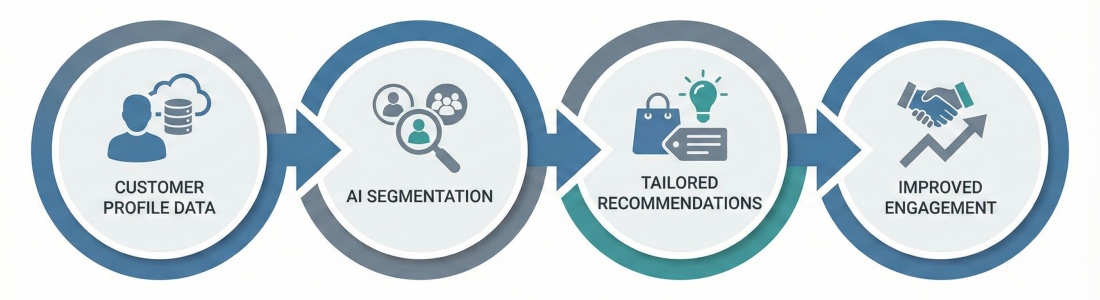
AI enables businesses to deliver hyper-personalized experiences at a granular level. From predictive product recommendations to personalized digital content, brands can tailor interactions in real time.
E-commerce platforms personalize landing pages and offers based on real-time user behavior
Marketing teams use AI analytics to segment audiences and deliver dynamic, targeted content
This trend significantly improves customer satisfaction while driving higher loyalty and revenue, making personalization a core business growth strategy.
5. AI in Cybersecurity & Risk Management
As AI adoption increases, so does exposure to digital threats. In 2025, organizations depend on AI-powered cybersecurity solutions to detect vulnerabilities, monitor suspicious activity in real time, and defend against advanced cyberattacks.
These systems analyze massive volumes of data much faster than traditional tools, enabling enterprises to protect critical assets, maintain compliance, and anticipate emerging risks.

6. Responsible, Ethical & Governed AI
The rapid expansion of AI has intensified global focus on ethics, governance, and compliance. Responsible AI is now essential for building trust and ensuring long-term sustainability.
Key focus areas include:
Reducing bias in AI models
Ensuring transparency and explainability
Protecting customer data and privacy
Meeting regulatory and compliance requirements
Organizations that implement strong AI governance frameworks improve decision quality and strengthen stakeholder confidence.
7. Skills, Culture & Organizational Transformation
Successful AI adoption goes hand in hand with workforce readiness. By 2025:
Most enterprise roles require some level of AI literacy
Companies increasingly invest in AI training and talent development
This shift supports not only technology adoption but also cultural transformation, enabling teams to collaborate effectively with intelligent systems and drive innovation.
8. Edge & Cloud AI — Distributed Intelligence
AI workloads are increasingly distributed across cloud platforms and edge devices, combining scalability with real-time processing.
Cloud AI provides enterprise-scale computing power for advanced analytics
Edge AI delivers intelligence closer to devices, reducing latency and bandwidth usage
This hybrid approach enables next-generation applications such as real-time monitoring, IoT automation, and connected systems.
Conclusion
In 2025, artificial intelligence is no longer a distant concept—it is operational, strategic, and deeply embedded in modern businesses. From autonomous AI agents and multimodal intelligence to personalization and cybersecurity, these trends highlight how AI is reshaping business models and customer experiences.
For organizations ready to adopt and scale AI technologies, the opportunities are immense. However, long-term success depends on having a clear strategy, responsible governance, and sustained investment in talent and infrastructure.